"You are young and life is long, and there is time to kill today"
— Pink Floyd

Thursday, February 23, 2017

Pop Culture Favorites of 2016


Welp, glad that's over. No need to dawdle, let's get right to it.


The Pretty Damn Goods of 2016


The Lobster

As the years progress, it seems there’s nothing new or exciting under the sun of a dystopian setting, but Greek writer/director Yorgos Lanthimos assured us last year that such a notion is nonsense with the startlingly original near-masterpiece The Lobster. The Lobster and its cast are so profoundly committed to bizarreness for every single frame. Colin Farrell, a personal top-ten favorite working actor, yet again shows why he perseveres in the film industry by making such a bold choice to play in such an unto-itself movie. The supporting cast, which includes John C. Reilly, Rachel Weisz and Ben Whishaw, add to its unique flavor. While it is most certainly a love-it-or-hate-it movie, regardless of where you fall, once you’ve seen The Lobster, you won’t soon forget it.


"The New KKK" - Episode One of
 United Shades of America

The premise of W. Kamau Bell’s CNN series United Shades of America is noble and concise. As he says, “I’ve made a living finding humor in parts of America I don’t understand. I’m challenging myself to dig deeper. I’m on a mission to reach out and experience all the cultures and beliefs that add color to this crazy country.” It’s certainly not a new idea, but the show sets itself apart from the rest of the doc series multitude by having Kamau speak with members of the Ku Klux Klan. For those unaware, Kamau Bell is black.

His conversations range from shockingly cordial to uncomfortably confrontational. Bell meets every person’s conversation, from a man referring to different races as “beasts of the field” to cracking jokes about lighting a cross, with respect that they surely don’t deserve. He realizes that any argument would be totally unnecessary, as their words are damning enough. He also speaks with other citizens of these towns who decry the actions and beliefs of the Klan.

Culminating in Bell attending the burning of a cross, this first episode of United Shades is an outstanding feat of modern journalism, and it’s carried out by a comedian. The subsequent episodes are all fascinating commentaries on the different “shades” of our country, but this episode is a symbolic achievement unlike any other. His closing line is a quite something to reckon with: “Unlike most of the black people in the history of this country who have been present for a cross burning, I get to leave.”


Season One of Preacher

How many television series, both old and new, do we try each year? With streaming and on-demand services, as well as existing channels, the number of attempts can add up quickly. But when Seth Rogen and Evan Goldberg decide to bring a cult classic graphic novel to life, that's a can't-miss scenario. As it turns out, that product, Preacher, was not only a complete blast but one of the standouts of the new TV crop of 2016.

Exceptional experiences like the "Sundowner" episode and the final two episodes of the season are unlike anything else going on in television, let alone like anything that preceded it. Fueled by a eclectic cast of memorable characters and the creative eyes of Rogen, Goldberg and Breaking Bad alum Sam Catlin, Preacher is not only another hit in AMC's excellent slate of drama, it seems poised to continue on its track of exciting and vibrant originality for seasons to come.


O.J.: Made in America

The hype was real. Though it would seem that the murder of Nicole Brown Simpson and OJ’s subsequent Trial of the Century is territory that has been tread to oblivion, especially after FX’s The People v. OJ Simpson, Ezra Edelman’s enthralling eight-hour documentary reminds us how much everything that went down still means, and what it shows America about itself. It is endlessly fascinating to see OJ and everything surrounding his post-USC life and trial through the lens of the pre-1994 racial history of Los Angeles. Even knowing the outcome, as we all do, the doc is still thrilling and astounding. Supplied with unforgettable interviewing soundbites and insights, OJ: Made in America stands tall as arguably the best true crime documentary ever made.


Ryan Gosling

I’m sure most folks would agree there aren’t many (or any) actors the likes of Marlon Brando, Humphrey Bogart or Cary Grant working today. Whatever the reasons may be, more actors in those days commanded audiences’ attentions by just existing on screen. It didn’t really matter what Paul Newman was up to in a particular movie, but taking your eyes off him was hard to do. I believe there is no other actor working today who can carry the mantle of everything we know as a Hollywood legend than Ryan Gosling.

In 2016, Ryan Gosling had perhaps his most unique cinematic year. In The Nice Guys, he plays a haphazard and intoxicated private detective and father to hilarious effect, while also stealing every single scene from the mighty Russell Crowe. It’s really the first role he’s had where he’s allowed to cut loose, and the performance teeters many times on the edge of slapstick. Before 2011, no one would’ve expected Gosling to thrive in a role like this, and he succeeds seamlessly. In the critical darling La La Land, both he and Emma Stone breathe life into two characters who, in the hands of numerous other actors, would have been oppressively vanilla. His singing leaves a little something to be desired, but he lays on the charm with effortless ease and to overwhelming effect

Gosling has the capacities of many legends of the past, like the charm and wit of Paul Newman, the broodiness of James Dean, and the mystery and intimidation of Clint Eastwood. He also has the capacity that a few other Golden Age elites had: to be just a little bit goofy. Even if he doesn’t necessarily receive such praise now, in time, Ryan Gosling will one day be recognized as an icon of American culture.


Favorites of 2016


https://www.nbc.com/sites/nbcunbc/files/files/styles/640x360/public/images/2016/11/13/161110_3423709_November_12___Dave_Chappelle.jpg?itok=_pzuUqVe
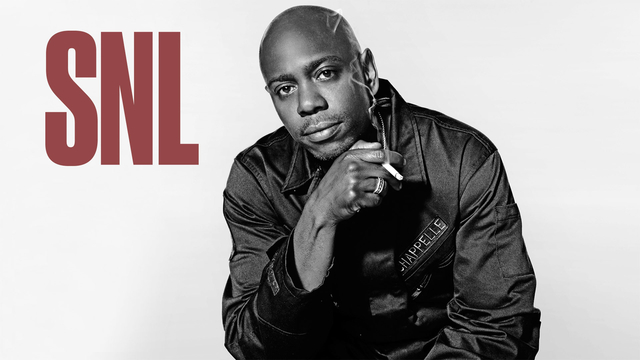
10. Dave Chappelle/A Tribe Called Quest 
Saturday Night Live — Dec. 12, 2016

Though the cold open was a bit problematic, Dave Chappelle’s first time hosting Saturday Night Live will go down as one of the best episodes in the series’ run, not only as a reaction to the results of the election, but as a belatedly fulfilling performance by one of the most cherished performers in the history of American comedy.

Chappelle was unhinged and reserved, hopeful and cynical, brash and timid. His monologue was hilarious and uncensored, culminating in the most powerful and eloquent moment I’ve ever seen on Saturday Night Live. The way he had the attention of every person in Studio 8H during the closing minutes of his monologue applied to everyone who watched around the country. It made us think for a few minutes that Dave Chappelle has the power to change the world. In his words, it made us hopeful. After that, he made us laugh. I can’t remember a time in my life before this episode that I ever shed tears of joy, but I literally cried during the Walking Dead digital short. On November 12th, Dave Chappelle, a figure who is simultaneously mysterious and beloved, reminded us that he’s still got it.


 https://www.movie-list.com/img/posters/caps/swissarmymanb.jpg
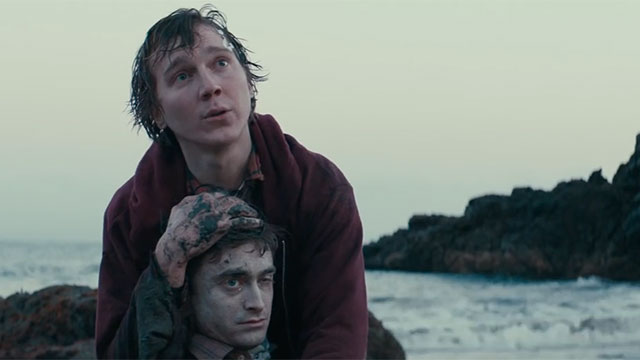
9. Swiss Army Man

There has never been anything like Swiss Army Man in the history of ever.

Nearing the point of suicide on a deserted island, Paul Dano's character, Hank, notices a body that has washed ashore and is flatulating, played by Daniel Radcliffe. From there the two beings escape their island prison and develop a bromance the likes which have never been seen. Though Swiss Army Man wholly bizarre, there is something reassuring in that fact. There are endless consumers of pop culture who want to see more products like this. That two excellent actors like Paul Dano and Daniel Radcliffe so willingly threw themselves into a project like this is even more reassuring. The “farting corpse movie,” as it was dubbed early on, has just as much if not more heart than anything out there, and it has some really fascinating and tender ruminations on friendship and love.

Whether or not the viewer like it, Swiss Army Man is a fantastic piece of art, and it deserves a pillar in creative Valhalla for the masterpiece that it is.


8. Season One of Quarry

One of the main reasons, if not the primary reason, I insist on doing these lists every year is because maybe someone reading will check out something thy hadn't heard of or wasn't quite sure about diving into. More often these days, I rely on harbingers of pop culture, like The Ringer's pop culture podcast The Watch with Chris Ryan and Andy Greenwald. Last fall, they raved about a new Cinemax show called Quarry, based on a popular book series by Max Allan Collins, and rightly so.

Returning home to Memphis from a second tour in 'Nam in 1972, Mac Conway aka Quarry (Logan Marshall-Green) struggles to adapt to a home in which he is unaccepted by the public for murky reasons by which he himself is endlessly tormented. Long story short, he quickly ends up in a criminal underworld whose vastness is unknowable, carrying out hits and running for his life and the life of his wife, played by Jodi Balfour. Marshall-Green certainly has a Tom Hardy thing going on, but his performance is nuanced and intense. What's more, the secondary and tertiary characters can be just as compelling as the main action of the show. Quarry’s coworker, so to speak, played expertly by Damon Harriman, is first introduced half-naked and alone in a motel room singing a Spanish version of Nillsson’s “Without You.” The mysterious and Southern Broker, the unnamed dealer of Quarry's hits, is played by veteran Scottish actor Peter Mullan.

Quarry, unlike many new shows, is not a slow build. The stakes are set very quickly, and to captivating effect. Once you start it, it would be truly shocking if you don't finish.


https://lh3.googleusercontent.com/BPIJJgJr0bBlT3pQ1hp57sn-MjEnLfyHLHDg4-fLeODSauRnrvPcXsnCb9_S0nGr5u8=w1264
7. Season Three of Halt and Catch Fire

Heading into its fourth and final season in 2017, Halt and Catch Fire quietly remains one of the most compelling shows on television. In three seasons, all of which are quite different from one another, both in style and tone, Halt's characters play out a fascinating story without an overly dramatic flair while still being full of emotion and elegant complexity.

The four leads are tremendous. Mackenzie Davis, the goddess Mackenzie Davis, has been steadily giving the most underrated performance on television for the last three years. A big to-do was made about the general shift in tone from the first to the second season, but the overall evolution of the show in terms of which characters were the main focus points at the start compared to where we are now is astounding. Some who were riding shotgun to begin with are now chilling in the backseat, so to speak,  and vice versa, but the characters have never been compromised. That's the special thing about Halt: these characters are so rich, and it's through the abilities of Davis, Kerry Bishe, Scoot McNairy and Lee Pace that bring the richness of these characters to bear.

Eventually, as is unfortunately often the case, when the entirety of Halt is readily available on one common platform of consumption or the other, it will be recognized by the amount of people it deserves as the masterful tale that it is. In terms of both quality and prestige, Halt and Catch Fire is a tech-age Mad Men.


6. The Night Of

The commercials for The Night Of could not have been more vague or mysterious, but when it comes to any sort of upcoming series on HBO, be it a mini or a drama, like most people who have the service readily available and recognize, I'll give it a shot. Along that same line, more and more, HBO shows become a shared social and cultural experience as they unfold every week. As it turned out, The Night Of was one of the more gratifying experiences HBO has produced.

The first episode plays like a waking nightmare of a person who doesn’t belong where they are at any moment, and it’s certainly one of the most riveting episodes of any series ever. Some folks disagree on whether or not the show maintained that level of viewer engagement after the first episode, but an indisputable fact is that Naz, played brilliantly by Riz Ahmed, was the most interesting new protagonist on a show in 2016. His journey and evolution over just eight episodes is more enthralling than many character evolutions over seasons of development. The rest of the cast and the characters they inhabit, from John Stone to Naz’s parents to the cat, are as good as or better than any others out there.

A bad ending can ruin a good or great thing. The inverse of that applies as well; a good or great ending can elevate something that would not have otherwise been memorable. The ending of The Night Of is so spot-on that… Well, let's leave it at that, because not only is it worth your time, you'll remember it long after it's over.


5. Season One of Atlanta

Donald Glover used to seem like someone who is acutely aware of how good he is at everything. From the back-in-the-day Derrick Comedy videos, to writing on 30 Rock, to his standup routine, he was clearly talented and hilarious, but there was something about the way he presented himself that seemed off-putting. In the fall of 2013, though, everything changed. When he published a series of Instagram posts of handwritten notes on Marriott stationary, it became very clear that he felt no different than the rest of us who have our own insecurities, doubts and fears. I myself was naïve enough to think that the way someone behaves on the outside is a reflection of who they truly are, when many times, it’s just the opposite. That apparent shift, perhaps maturity, is no more evident than in the first two episodes of his brilliant original show on FX, Atlanta.

There was no moment I witnessed on television last year as 180-degree jarring than what occurs in the holding cell in the second episode. It let viewers know at the outset the realms of the capabilities of Atlanta: gut-clutching hilarity and heart-wrenching depiction of the human experience. Those two things aren’t necessarily mutually exclusive, and they often occur separately throughout Atlanta’s first season, but a scene like that has rarely shifted from one to the next so abruptly.

Watching Atlanta was such a rich experience, because at numerous points, it's obvious what an original revelation it is, though it never sacrifices some of the laughs we’re used to from a conventional American comedy. Having said that, whether it’s black Justin Bieber or the pseudo-Tavis Smiley talk show episode, it is obvious to anyone that “conventional” is not a word that would ever be associated with Atlanta.


4. Hell or High Water

In any other year, a movie like Hell or High Water would likely pass by as just the quality independent movie that it is. But in 2016, movies that are simply and expertly executed stand out from much of the studio drivel that packs our cinematic multiplexes. Hell or High Water is such a shining exception.

Hell or High Water plays like a timeless American tale of two brothers trying to save what's theirs by any means necessary. It has more re-watchability than any movie I saw in 2016. In my opinion, Jeff Bridges gave the finest cinematic performance of 2016 in Hell or High Water. For the majority of the movie, I found myself thinking that he was just sort of rehashing his Rooster Cogburn character from True Grit, but the banter that he had with his partner, played by Gil Birmingham, was so colorful that it's not very bothersome. It seemed that anyone of a similar age could play the character. Only in the last twenty minutes of the movie did the brilliance of Bridges’ performance become obvious. He is the only actor who could bring all the nuances of that character from the pages of Taylor Sheridan’s magnificent script to fruition.

The wide shots of the landscape are gorgeous. Cinematographer Giles Nuttgens and director David Mackenzie combine to make the desolation of West Texas look like something you'd want to hang on your wall. Coincidentally, Hell or High Water is also a movie that deserves a place on the wall among your permanent collection.


3. Season One of Last Chance U

“They say we just fat-ass, dumb-ass country folk. That’s fucked up, ain’t it?” 

As a Mississippian, maybe I’m biased in my admiration for the feat that was Last Chance U, but I doubt anyone who watched it would feel differently. The technical aspect of the way the documentary is put together is staggering. The cinematography of the game action is peerless in athletic photography. It’s even better quality than the slow-motion NFL footage. If that weren’t enough, the reality of the humans and situations is as enthralling and effortless to invest in as anything out there. The way the story is told and unfolds is completely riveting. Folks from the area surrounding Scooba and EMCC knew full well the infamous incident that transpired at the end of the 2015. It’s all the more astounding that knowing how everything would end didn’t remotely affect the experience of the show.

Like most students or young people under the tutelage of teachers or coaches, you are subservient to the people who are supposed to show you what’s right. They should be the example of the standard human you should aspire to be. Last Chance U has the yin and yang of such humans. Buddy Stephens is one of the worst examples of how to be a human being. Profanity is effective when well-timed and used for emphasis, but Buddy Stephens swears with the frequency of the intake of breath. On the other hand, Brittany Wagner is a phenomenal example of how to be a human being. These real life entities are more riveting in their respective real life jobs than many written and comprised fictional characters. 

Last Chance U is a fantastic documentary series, but more than anything it’s a tragedy. It reminds us that no human is infallible, especially those in charge of others. These young boys are in a place that, by and large, is their last chance to break through their situations. Some of them fail themselves, but it sure seems like more of them are failed.


2. Manchester by the Sea

The cinematic hype machine so frequently pumps you only to let you down. Be it early festival buzz or critical ravings, too often we walk into something expecting it to be one thing and leaving feeling like you aren’t on the same page as everyone else (lookin’ at you La La Land). Sometimes, though, that buzz is met. Rarely, that buzz is surpassed. I had that feeling one time this year, and it was seeing Manchester by the Sea

It’s understandable that an average person might not want to subject himself or herself to a movie about a janitor taking care of his dead brother’s son for 135 minutes, but it is a rare and fulfilling experience to witness an elegant portrayal of how humans process grief. There is more than that to the story, but to spill it here would be an injustice to the brilliant way Kenneth Lonergan’s screenplay unfolds. The performances are off-the-charts phenomenal, though not in the typical showoff-y way that Oscar performances are prone to be. Casey Affleck’s performance as Lee Chandler is one of the most uniquely reserved I’ve ever seen. For a performance that is as acclaimed as it is, it might be confounding to see how withdrawn it is. His is proof that you don’t have to fall to yell and boo-hoo to be dramatically effective. The wearing of certain emotions can be more powerful than the enacting of them. Michelle Williams does not have much screen time, but what she has is put to some serious use. The scene of the year involves the two of them, and it is utterly unforgettable.

It's not for everyone, but Manchester by the Sea is a testament to the power of cinema and performance, grief and the human experience. It's not the easiest watch, but within it are ample rewards waiting to be found.


1. Season Six of Game of Thrones
(SPOILERS)
 
It just couldn't have been anything else.


Like any other season of Thrones, it had its share of slogs, but unlike the rest, the peaks in season six are too many to count. From the resurrection, to "Hold the door," to "The Winds of Winter," this was unquestionably the series' best season. At season's end, we are poised to perhaps witness the greatest homestretch in modern drama. Has there ever been anything more exhilarating in the history of the medium than the Battle of the Bastards? How amazing is it that Tyrion is going to essentially be the consigliere to the Khaleesi? And how terrible a place to live is King's (Queen's?) Landing going to be under Cersei?

The sixth season of Thrones is the answer to the question many may find themselves asking before diving into any long piece of pop culture: is it worth it? Millions of show-watchers, not to mention all the book-readers, have struggled with that question throughout the consumption of this soul-obliterating show. Fully aware that there are two seasons of stories left to wrap up yet, the answer to the question of “Is Game of Thrones worth it?” to this point is a resounding “You bet your ass.” All of the suffering, while by no means letting up, at least for a little while, has paid off. Finally, after six seasons of talking a big game and teasing its imminent arrival, Winter is here.

Friday, February 26, 2016

Pop Culture Favorites of 2015

"What a time to be alive."

I know. I'm tired of it, too.

It's an overused phrase, but considering the entirety of the year that was 2015, it is most certainly accurate and appropriate. It was a fantastic year for movies, music, television, and artists of all kinds. Conversely, I think we'd all be hard-pressed to recall a more dismal year in the annals of human treatment of one another. It's been a trying year for the world at large, and one in which the reprieve of the great creations of artists has rarely been more important.

On a personal note, this is the fifth year I've been doing these lists. I've very much enjoyed the deliberation and creation of them, as well as the random feedback I receive. It means a great deal. Thanks for reading, whoever you may be, and I hope you continue to check in every now and then. As usual, any significant spoilers included in these entries will have disclaimers.

Let's get to it.


Special Mention: Singular Experiences in 2015


The Gift

"...the bad things, they can be a gift. And that's the way I like to see things."

In terms of sheer cinematic experience, The Gift was unparalleled. On its face, its synopsis, you've most certainly seen some incarnation of The Gift half a dozen times before, maybe more. A couple is stalked by some person from one of their pasts, he or she starts to torment them, yadda yadda yadda. There are so many stalker movie tropes you're geared up for, and they, along with any expectations you may have, are completely subverted. The Gift is the epitome of a slow builder. It's never comfortable, and you know it's escalating toward something, but who knows what it will be. I damn sure didn't.

There is such a fantastic feeling in not having the slightest idea where you're being taken by a movie, and that's exactly what happened the first time I watched The Gift. It played me like a drum and I loved every bit of it. The Gift is one of those you-can-only-see-it-for-the-first-time-once sort of experiences, but Joel Edgerton's directorial debut is one hell of a doozy.


"Mortal Man" by Kendrick Lamar

I remember the morning I woke up to find out that Kendrick dropped To Pimp a Butterfly on Spotify sometime in the night, a full week before its scheduled release. I had that day off from work, so I nestled up on the couch with a fat cup of joe, slapped on my headphones, and listened to the album in its entirety. It is undoubtedly a peerless piece of art from one of the world's greatest living artists, but I haven't had the desire to listen to the album at any given moment with the same desire as good kid, m.A.A.d city. However, I can't think of a more jarring closer in all of recorded music. Over the course of his album's 70-plus minute running time, Kendrick peppers throughout the album added lines to a cryptic phrase that begins with, "I remember you was conflicted, misusin' your influence." It sounds as if he's drawing out a long piece of poetry or something, and by the middle of the album's final track, "Mortal Man," you realize he's talking to Tupac.

As I'm sure is the case for thousands of other fans, listening to that for the first time will always be a singular moment in time I'll be able to recall forever. The ease with which such a conversation was orchestrated with such a long-gone legendary figure is as unsettling and impressive as anything that has ever been done in music. In the homestretch of the album, Kendrick recites a piece that "a good friend had wrote describing my world." The jazz instruments in the background are building to this near-deafening crescendo as he asks Tupac's perspective. But he's gone. He calls out, "Pac...? Pac...? Pac...?" and To Pimp a Butterfly drops out. My eyes were wide and my cheeks were tingling. Goosebumps popped up all over my arms, and I sat there reeling in silence for minutes. For a brief moment, Kendrick Lamar raised Tupac from the dead.


The Pretty Damn Goods of 2015


The opening credits of Season Two of The Leftovers

Much has been discussed about the creative advancements of the second season of The Leftovers compared to the first, so much so that after not having watched a single frame of it, I smashed both of them in a week over the Christmas holiday. Really, the only problem I had with the first season was the unsettling opening credits. They're awful. I watched them one time in full during the first episode and fast-forwarded through them every subsequent episode. Nearly everything about season two turns the series on its head in a completely jarring and refreshing way, and it's no more evident than in the brand new opening credits sequence. It conveys every theme, frustration and fear there is, not only in the series, but life itself. It's a complete 180 of season one's title sequence, and it is profoundly moving. Along with the unmistakable voice of Iris Dement and her bright guitar, there are images of humans interacting with one another pre-Departure. In every picture, there is an absence of a figure, replaced by a beautiful set of clouds or some celestial scene. It's sweet, funny, and haunting. "Let the Mystery Be" addresses all of the existential worries humans have and it reassures that, even though answers to the whys and whats of life will never all be answered, living a life content with the big mystery is a beauty all its own.


Bone Tomahawk

Few cinematic experiences are better than the unsuspecting, unassuming horror flick. Bone Tomahawk is exactly that. It is a simply made study of frontier characters that jumps genres at will and is exceptionally well-crafted. When it slows back down after a thoroughly unsettling opening, we know that the movie will inevitably ramp back up, but it's in the numerous moments of general interaction between the characters that sets Bone Tomahawk apart from any other indie or western. The language used by the characters is so richly written that it sounds like something from the world of the Coen brothers. The cast that delivers these lines and embodys these characters is flawless. Patrick Wilson is guaranteed quality every outing, as is Richard Jenkins. Matthew Fox has never been so good in a film, and Kurt Russell is great, as one might expect.

When Bone Tomahawk does ramp back up, though, it escalates into full-blown horror the likes of which I have never seen. Elements of the horror are reminiscent of The Descent, but the violence is something all its own. There is a murder scene in the latter third of the movie that is more gruesome and barbaric than anything single thing I have ever witnessed. I don't think I've ever paused a movie to go walk around and calm back down until Bone Tomahawk. It's rare to find a film with fresh characters, language and creative horror, and Bone Tomahawk has that illusive combination in spades.


The first season of Better Call Saul

"They called him Slippin' Jimmy, and everybody wanted to be his friend."

Better Call Saul is sort of an anomaly, in that it may not have been as good as you wanted it to be, but it was definitely better than you expected it to be. The fact that this series now exists is a wonderful gift for any Breaking Bad fanatic because it's a thrill to spend time with a couple of characters that you grew to love over the course of the show. The thing about Better Call Saul is that it scratches an itch you never knew was there. You loved Saul's brief moments on the show, but you didn't necessarily ponder how he came to do what he did.

Better Call Saul is unquestionably good. However, it is not without its faults, to be sure.
The Kettlemans? Who cared about any of that?
Mike? You're going to make one of the most interesting characters from Breaking Bad a series regular and then stick him in a parking booth for more than half the season? Weak sauce.
Chuck's illness? Again, who cared?

To be fair, though, when Better Call Saul was good, it was great.
The end of the first episode? Come on. I've never yelled so happily at a TV set.
Mike's "origin" episode? Easily one of the best dramatic television performances of all time.
The confrontation in "Pimento"? As heartbreaking a moment in storytelling as anything in television or film.

Whether or not each episode was enthralling, just about all who watched Better Call Saul wanted to see Jimmy McGill succeed. We all know he'll be a success, just a different kind of success. That journey will surely be more gripping than this first outing, and it will certainly be a blast to watch.


Sicario

On an episode of Marc Maron's WTF podcast, he and writer/director Paul Thomas Anderson discuss shooting in the American Southwest.

"You're from New Mexico," Anderson says. "You know, you get out there and you look like you're making an epic and you look like you know what you're doing if you just have a camera in the right spot because it just looks gigantic."

While Sicario is not an epic in the traditional sense, it captures the vastness of the Southwest and Mexican border towns in a more modern, urban sense. The juxtaposition of where these packed-like-sardine Mexican border areas, like Juarez, are positioned in the vastness of the desert is fascinating.

What sticks out in my mind after watching Sicario twice is how much it feels like Se7en. There are many obvious dissimilarities, to be sure. Se7en takes places in a claustrophobic, rainy, unnamed city, and the world of Sicario is barren wasteland. However, both share the exact same senses of dread and imminent danger. Like Fincher, Denis Villeneuve creates an aesthetic in his films that is singularly noticeable, mostly one that exudes the feeling that not a single positive thing will happen to anyone. The cinematography of Roger Deakins, the haunting score of Johann Johannsson, and the brilliant eye of Denis Villeneuve are proving to be an artistic team that is peerless in modern cinema. Anchored by an intense, yet subtle performance from Benicio Del Toro, Sicario is a thoroughly unforgettable modern thriller.


Brooklyn

I'll be the first to admit that there are a dozen or more movies every fall that I am compelled to see specifically because they're buzzed about come awards season. I'm a sucker for them, and I suppose always will be. All I knew about Brooklyn going into it was Saoirse Ronan played an Irish immigrant in the 1950s and High Fidelity writer Nick Hornby adapted the screenplay. In a short time I left the theater completely blown away by what felt to me like an instant classic.

To call Brooklyn simple seems disparaging, but it's just not showy or extravagant in ways that period pieces can easily be. It tells one heartfelt story. It's elegant and straightforward, yet completely enthralling and entertaining. It also has the most moving scene I experienced all year, which fully encapsulated the theme of the movie. Shortly after Eilis (pronounced AY-lish) arrives in America early in the movie, she is helping serve Christmas dinners to down-and-out Irish workers, “the tunnel-diggers and road-builders,” as Father Flood (Jim Braodbent) calls them. In the middle of the dinner, Father Flood invites one of the workers to stand and sing an Irish folk song. Everyone in the room stops to listen, and it's one of the most poignant moments I've ever experienced. The room becomes full of people who aren't really there. With their gazes absent and eyes brimming, the souls of Eilis and the workers are transported back to their respective lands. That scene, as well as the film itself, are testaments to the power of whatever it is that we call home.


Favorites of 2015


10. The Jinx: The Life and Deaths of 
Robert Durst

Andrew Jarecki is a monster. Now, if you watched The Jinx or just recently became aware of the existence of Robert Durst as I did, you might be thinking that if ever there was a monster, Durst is surely one. Robert Durst is a nut, and, after watching The Jinx, almost certainly a brilliant murderer. When he sits down for his first interview with Jarecki, he immediately recalls the sentiment of Dr. Loomis in Halloween when he recounts to Sheriff Brackett what he saw when he first met Michael Myers. "The blackest eyes... the devil's eyes." However, the fact remains that Andrew Jarecki is a monster.

By the time the last episode of The Jinx comes around, viewers are aware of the most damning piece of evidence to befall any of the bizarre missing persons or murder cases involving Robert Durst. The handwritten font of the anonymous and infamously misspelled "cadaver" note, which referred police to the executed corpse of Susan Berman in "Beverley" Hills on December 23, 2000, is found to be a spot-on match with another handwritten letter discovered among the old belongings of Susan Berman. That letter that was sent by Robert Durst. In the letter, addressed to Susan less than two months before she was killed, Beverly Hills is again misspelled "Beverley." Jarecki knows he has the most pivotal article in existence in regards to Robert Durst's potential involvement in any of his "deaths," so he and his film crew put the letter in a safety deposit box and sit on it until they can schedule another interview in which they confront him cold on the similarities between the letters. This takes months.

If The Jinx tries to show us anything, it's that Robert Durst is an unhinged, yet unnervingly calm person who is likely capable of taking a life at any whim, particularly his younger brother Douglas. It is unquestionably clear that Jarecki sat on this evidence until he could confront Durst about it for the sake of his documentary, rather than making the existence of the note known. This move raises some serious moral quandaries. Jarecki knew what he would have if he got Durst in front of a camera reacting to something he surely had forgotten existed. However, if he had just gone straight to the police with the note, who knows what would have happened? He could have been dismissed, or worse yet, the note could have been confiscated and then nothing could have happen. Does he do it for the sake of the piece, or for the sake of justice? What is certain, though, is that after The Jinx ended, Durst was on the run and caught. He certainly could have hurt more people, but thankfully he didn't. Jarecki's decision was a bold one, and though it may be morally divisive, it leads to what is arguably the greatest finale in the history of television.


9. "eps1.5_br4ve-trave1er.asf" - 
Episode Six of Season One of Mr. Robot
(Minor spoilers)

During an appearance on Andy Greenwald's old Grantland podcast, Rami Malek was asked about the genesis of his involvement with Mr. Robot.

"I was sent this script and it was entitled Mr. Robot, and I was like, 'Are we sure about this, gang?'"

He said the comment in jest, but that pretty much sums up how I looked at the show before I ever gave it the time of day. Rami Malek has stuck with me ever since the summer HBO's The Pacific first aired, in which he was the clear standout in that vast ensemble cast. As interesting as the concept of the show itself may have been, any potential success for Mr. Robot hinges entirely on the casting of Eliot, the lead character. Whether in narration or physical form, Eliot occupies nearly every frame of Mr. Robot. He has to be played by someone who will enthrall the viewer, and Rami Malek is that individual. Rami's performance feels immediately iconic. Eliot is the rare and strange combination of a character that is almost so unsettling that you want nothing to do with him, yet you're so intrigued by what secrets he's hiding behind those enormous eyes. And of course there's Christian Slater, who is as great in this as he's been in anything, well, maybe ever. It's nice to see his feet settled as being a crucial part of such an acclaimed project.

The "Brave Traveler" episode is the point in Mr. Robot where the series shifts from intriguing character study to a full-blown thriller with serious stakes. The homestretch of this episode is easily one of the most anxiety-inducing, heart-rending episodes of television in years. Up to this episode, viewers have generally assumed that the pseudo-philosophical drug dealer Fernando Vera is nothing more than a cliche who was in Eliot and Shayla's way, but by the end of "Brave Traveler," what once seemed silly becomes absolutely horrifying. The unbearable buildup to the reveal at the end is unlike anything I’ve experienced in a show, perhaps only since the train heist in Breaking Bad. Just like the end of the "Dead Freight" episode of Breaking Bad, "Brave Traveler" is the moment where things will never be as they were. It takes our expectations, puts them in a sack, and violently shakes them out to be scattered in the wind beyond all comprehension.

I find myself comparing Mr. Robot to Breaking Bad because it really is that good. Like Breaking Bad, it takes the average viewer a little time to decide if this is a world to be fully dived into. Vince Gilligan made sure the world of Breaking Bad had appropriate consequences, the worst of which first appeared in “Dead Freight.” That was in the final season. Sam Esmail made that decision six episodes into his show’s run. Evidently, in his world, no one is safe.


8. "Hardhome" -
Episode Eight of Season Five of Game of Thrones
 (MAJOR SPOILERS)

Any honest fan of Game of Thrones will tell you that season five was far from the series' best material. The acclaim it's received from various awards organizations is surely misplaced.
Jaime in Dorne?
The High Sparrow and the Faith Militant in King's Landing?
Khaleesi and the sociopolitical snooze of Meereen?
No thanks.

But then there's "Hardhome."

"Hardhome" is not only the best episode of television I watched in 2015, but it is the single most gratifying episode in the entirety of Game of Thrones. It gives us absolutely everything we've been wanting to happen, even since the opening minutes of the series.
We finally see Tyrion and Daenerys have a conversation.
We see Cersei continuing to be demeaned and tormented in a disgusting confined cell.
Sansa finally finds out that her brothers are alive.
And, oh yeah, HOLY SHIT BATTLE OF THE UNDEAD!

It was known by the episode's title that we were going to see where the Wildlings lived, but who had any inclination of what would ensue? Jon, along with the aid of Tormund, finally convinces a significant portion of the Wildlings that their generations-long beef pales in comparison to what's coming from farther north of the Wall. As Jon and company are getting ready to leave, and it becomes apparent we're about to witness a wight attack, it is damned terrifying. It also ends up being better than most action sequences in full-length cinema. It's hard to think of a better "Oh shit!" moment than the look on the faces of Jon and the White Walker when Jon wields Longclaw triumphantly against the seemingly invincible weapons of the White Walkers. Of course, the "come at me, bro" raising-of-the-slain moment at the end will forever live in meme infamy, but Jon smashing Beardy into a million pieces is the television moment of the year.


7. The Revenant
(Minor spoilers)

The success of The Revenant, be it financial or acclaimed, hinges on one thing: the casting of Leonardo DiCaprio. The character of Hugh Glass must be played by someone that moviegoers are comfortable seeing nature kick the shit out of for two-and-a-half hours, someone whose body of work is generally out of that particular element. It has to be someone who is admired and adored by the public at large, someone who can hold the collective attention of planet Earth, and Leonardo DiCaprio is absolutely that person. In The Revenant, Leo proves that he is one of the world's most compelling performers, carrying a movie with a virtually silent performance and looking like, well, a grizzled fur trapper, when his career and place in modern culture is based almost entirely on his looks.

The Revenant is by no means perfect. The grizzly roll on Leo is absolutely insane, Tom Hardy's accent is all over the place, and there are post-production dubbing moments that are some of the most poorly veiled I've ever seen. However, any issues it may have do not take away from the fact that The Revenant is one of the most entertaining adventure films in a very long time. Well before the movie came out, the shoot itself was already the stuff of legend well before it ever came out. It definitely shows. It's Jeremiah Johnson turned up to 11. There is definitely no question that Emmanuel Lubezki is the greatest living cinematographer. No one in the industry makes cinematic worlds as immersive as Chivo. And what a career shift for Alejandro González Iñárritu. From making three essentially identical dismal dramas in Amores Perros, 21 Grams and Babel, to the cinematic game changers of Birdman and The Revenant, Iñárritu has transformed himself from a repetitive storyteller into a legendary filmmaker.

Millions of people have admired Leo for the duration of his career, but only we of a certain age "grew up" with him. We've witnessed the interstellar trajectory of his career and have been interested every step of the way. On February 28th, there will be millions tuning into the Oscars, not just because of the controversy that has been created around them this year, but to specifically see the moment when Leonardo DiCaprio is inevitably and finally announced as an Academy Award winner. It will not only be a justified industry acknowledgement, but a cathartic experience for longtime fans, which proves that he is one of the most interesting actors who ever filled a silver screen.


6. The Hateful Eight Roadshow

If there is a certainty in this world, it's that Quentin Tarantino is the best friend film ever had.

For three hours in late December, I went back in time. I went to a movie theater and, upon issuing my ticket, received a Playbill-esque program that detailed the cinematic event I was about to see. As all the moviegoers entered the theater and took their seats, a managerial gentleman came to the front to briefly explain The Hateful Eight roadshow. As was the case for a precious few theaters around the country, special film projection equipment was shipped and arranged to show this unique version of the film by people specifically trained to use it. The movie would have no trailers, would begin with an overture, and would be split by a 10-minute intermission. The man left the theater, the lights went down, and a blood red mountain landscape came on the screen with the word "OVERTURE" in big block letters. Then, with Ennio Morricone's haunting score, began one of the most fun moviegoing experiences of my life.

The movie itself was a bit of a different animal. By sheer association with its creator, The Hateful Eight is unfortunately compared to Tarantino' previous works. Viewers are used to the size of his films, in terms of both running time and scope, but this is unquestionably his most claustrophobic work. Now, if you're of the opinion like I am that any Tarantino is good Tarantino, The Hateful Eight is never anything short of entertaining. It is unpredictable, shocking, and unwavering in its brutality. It is also at times tender, as well as thought-provoking and thoroughly satisfying. There was a palpable feeling after its completion that it may take some time to digest The Hateful Eight alongside, but there is no question that Quentin Tarantino makes the most distinguishable art in the world.


5. Leon Bridges - Coming Home

To the cynic, everything about Leon Bridges is contrived. Looking at the cover of Coming Home , or at any of his live appearances, it might seem that Leon Bridges is a methodically packaged product. He's a Sam Cooke-looking wannabe who's trying to ride the coattails of icons of bygone eras and genres that have seen very little cultural prominence in the last three decades. Even if that were true, and it certainly isn't, what's wrong with that? Answer: not a damn thing. No one else seems to be putting music like this out there on such a level, and it's absolutely wonderful. Leon Bridges is the real deal.

From the opening seconds of the title track to the closing notes of "River," Coming Home is a trip. It's a sonic treat that's such a rarity in popular music. It's brand new, yet it sounds like it could be fifty years old. It induces immediate nostalgia without being nostalgic itself. It feels as though Coming Home has been around long enough that grandparents of the present generation might've danced hand-in-hand in their heyday to "Better Man" and "Lisa Sawyer" while it played in their living rooms on home record players in the 1960s. Coming Home is of a particular time, yet it is timeless. The tight ten song playlist covers just about every emotion there is to convey in rhythm and blues, and it's an album that I will always have at the ready.


4. Kingsman: The Secret Service
(Minor spoilers)

From start to finish, Kingsman is the perfect blend of everything the spy movies of yore wish they could be. Kingsman expertly walks the fine line between honoring spy movies of the past and succumbing to many of their campy tropes. The level of violence in Kingsman is so refreshingly shocking and brutal, but the dapper values of Kingsman itself balances out like a Latife '45 with a Big Mac. We should all be thankful there wasn’t a studio decision to turn Kingsman into a PG-13 outing, because it would have been absolutely terrible. With material and a cast like this, you either go hard or go home, and Kingsman went absolutely balls-to-the-wall.

This is a star-making performance for all time by Taron Egerton. The character of edgy-little-shit-turned-lovable-badass is by no means a new one, but he holds the movie down in every single scene he's in. Samuel L. is an effective antagonist, but that lisp is a mite unsettling. But Colin Firth... Good god... I've seen a lot of cinematic shenanigans in my day, but the church scene, as my grandmother would say, beats anything I ever saw. That scene is unquestionably the most beautifully brutal and relentless display of violence I have ever witnessed in any medium. The fact that Colin Firth was the individual who carried out such acts is, in all interpretations of the world, incredible. Seeing Colin Firth, who is no spring chicken, slide and and skate across a church while murdering scores of bigots as “Freebird” plays full-blast is the most fun anyone could ever have watching something so violent. That’s another thing; here I was thinking that we had long-since passed the point of no return on uses of “Freebird”  in anything. Nothing else would have fit, and God almighty Jesus is it great. As it turns out, Kingsman is too.


3. Season Two of Fargo

It's almost impossible for me to come up with the words, let alone arrange them in sentences, to describe the achievement that is the second season of Fargo. Last year, I was completely blown away that Noah Hawley and company created one season of a show that honored an American film classic by being the most compelling show on television. I'll be damned if they didn't go on and make a better one.

Season two continues with the characteristics of season one, as well as the movie: white-knuckle tension, eye-widening gore and numerous moments of genius subtle hilarity. Straight up, this season is legitimately the most flawlessly cast show I've ever seen. There isn't one false note from any player, lead or supporting. Jesse Plemons continues his amazing post-Friday Night Lights career. Kirsten Dunst has never been better. Patrick Wilson is incredible. Nick Offerman steals every moment of screen time. Jeffrey Donovan makes an amazing turn as the overreaching, dim-witted Midwestern psycho. There are so many standouts in this amazing lineup, but the one that steals the whole thing is Bokeem Woodbine. Every moment that Mike Milligan is on screen, there's something about him that is so indescribably fascinating. I think it's the bolo tie.

The general nationwide aftereffect of Vietnam is present in this season in ways I don’t think we’ve seen portrayed. Of course there have been numerous movies and shows about veterans coming home and the like, but by and large, those projects are only about that. The war has no prominent role in season two of Fargo, but the attitudes of nearly every single individual in the show are shaped by the turmoil the United States was in and the personal tolls it took on those directly in it or by association. In a tertiary way, season two is a commentary on small town USA trying to get back on track or control after too many years of unrest. That generation was exceptional because many of those individuals saw unspeakable evil in Vietnam. It reminds one of war in general; we think by going elsewhere to fight evil that we will win, when in fact, the evil and brutality that we perpetrate on one another is worse. That generation and the present are children of war.

The marvel of season two of Fargo is, even though it's set in 1979, how much it has to say about the present. Watching this season of Fargo and seeing American headlines every day has made for a fascinating look into the history of the American mind. Again, I find myself coming back to No Country for Old Men. Sheriff Ed Tom Bell is having trouble existing and fighting against what he sees as an unstoppable force of evil, not only in his small part of Texas, but the world itself. The idea of what used to be, how good things once were, and how terrible things have become has made a good man throw in the towel. Watching the second season of Fargo, reckoning with what it had to say about us, and existing as an American in 2015, made me come to a realization. It's one that many people already have, and it's that not being able to comprehend the violence of the present will always exist. The Sheriff Bells have always stood back with their hands on their hips and shook their heads, lamenting of a era long gone, one of innocence. Like some characters of the Coens’ universe, we frequently fool ourselves into believing something that never really existed. The evil of today, the evil of “Sioux Falls, 1979,” and evil itself has been around so long as man has drawn breath. We just like to think that, once upon a time, it wasn’t that way


2. Mad Max: Fury Road

Within seconds of the start of Mad Max: Fury Road, it's already the best of the series. Why? Because it quickly establishes the one thing that was missing from all the other Max movies: he's actually crazy! Finally, Mad Max is finally more than just a clever alliterative name of a brooding wasteland warrior. Who knows why it took the fourth outing for George Miller and company to make Max into a grunting, frantic madman, but it’s the personality the iconic character deserves, and the series as a whole is better because of it.

Fury Road is a feat of apocalyptic fancy and creativity. Dust and rust and hell on Earth never looked so gorgeous. The details of everything from the costumes and the vehicles to the sounds and the stunts are so unfathomably precise and subtle. That anyone could conceive of stunts of such groundbreaking magnitude is a feat unto itself, let alone carrying them out to perfection is one for all time. It is truly one of the most impressive feats of production in the history of action cinema.

The real star of Fury Road most certainly isn’t the titular hero — it’s the Road itself. Fury Road is the most breakneck movie I have ever witnessed, and is the all-time example of a reason to still go to the movies.


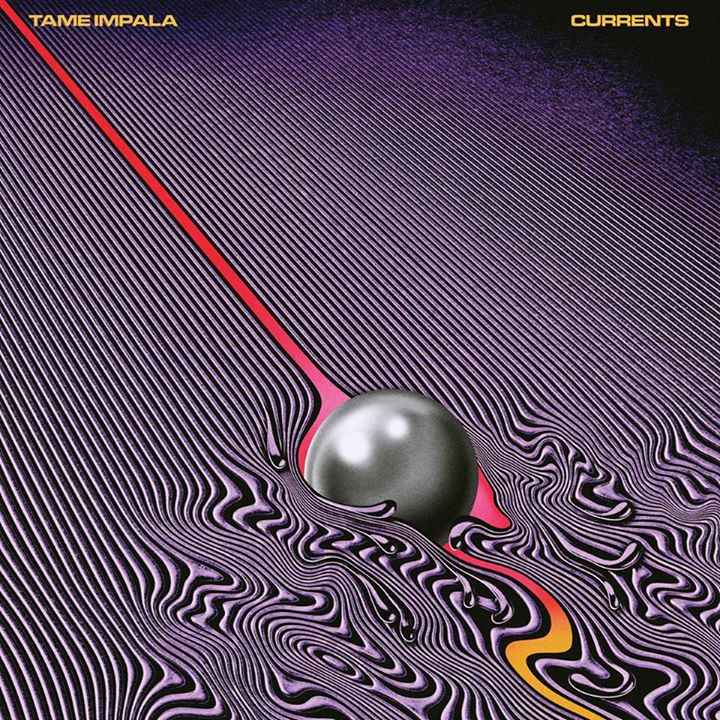
1. Tame Impala - Currents

I envy Kevin Parker. He is a sonic auteur. He is essentially the sole songwriter, producer and performer for all of Tame Impala's studio work. There is something so romantic about the idea of being barefoot, running from room to room in your home studio in a port city in Australia to play and mix each and every layer of music of which you are the sole composer. It is a feat of talent and ability unlike anything I can comprehend. It's clear from his method that what's most important to Kevin Parker is not just the music, but the album. The finished product that was engineered and molded into exactly what he wanted is all that matters.

If anyone who wasn’t familiar with the band queued up Tame Impala’s InnerSpeaker, Lonerism and Currents to play through chronologically, they’d be hard-pressed to mark the point where InnerSpeaker ends and Lonerism begins. They’re both fantastic albums of experimental production, but sonically, they sound pretty similar. When Currents begins, the feeling of freshness hits immediately, because Currents is absolutely clean.

If I've listened to "Let It Happen" once, I've listened to it 200 times. It's been over eight months since I bought Currents, and it's as fresh as it sounded on that day. It is flawlessly and intriguingly constructed. Three of the albums thirteen songs come in under two minutes, and two songs last over six minutes. No track tarries longer than it needs to, and the lengthy tracks never overindulge. Currents is one of the best albums of my lifetime and it is unquestionably an all-time personal top ten album.

In the same way millions hearken back to the days of Pink Floyd, Tame Impala is a time-defying oxymoron, a bridge of modern nostalgia that immediately sounds new but connects us back to the time of peak psychedelia. It genuinely seems like Currents is music the people Earth will be listening to as long as there are ears to soak in the waves.

Friday, February 20, 2015

Pop Culture Favorites of 2014


Pop culturally speaking, 2014 kicked ass. Sure, there was the typical crop of pop mediocrity and garbage, but we see that year in and year out. In general, music, television and film from this past year was much better than we've seen in many prior, especially this decade. Planet Earth may be falling apart all around us, but some excellent artwork is coming out of it.

Let's dive right in, shall we?


The Pretty Damn Goods of 2014


The very end of Season Two of House of Cards

(SPOILER ALERT: If you haven't seen and/or intend to watch House of Cards,
DO NOT READ ANY FURTHER!)

Come on! Has there ever been a better immediate ending to a season of television? When House of Cards started, I doubt anyone expected Frank and Claire Underwood's sinister plan to take over Washington and destroy everyone along the way would reach the mountaintop by the end of the second season, but there we were. Frank slowly glides into the Oval Office and pushes the rolling chair out from behind the desk. He places his hands over his new domain and feels it out. He slowly raises his head and looks at us, like so many times before. There are a few seconds of pause, then—BAP-BAP! His iconic double-tap of his ring becomes two epic fist pounds, and it smash cuts to black. So ends season two, and so begins the arrival of the baddest son-of-a-bitch to ever hold tenure in the Oval Office. The champ is here, baby.


The throat chomp - Season Four finale of
The Walking Dead

(I guess the pic kind of gives it away, but SPOILERS AHEAD)

Right up front, I hate The Walking Dead. I've watched every episode since the first moment it hit the air and, despite my seething hatred for this over-acted, atrociously written asshole of a show, I continue to watch it. I tell myself it's because I hope it will one day match the greatness and grit of the first six episodes, but it's really because so many other people I know watch it. It's a conversation piece. I've thought about throwing in the towel on the saga of Rick and Carl more times than I can count, and season four just about reached my breaking point. But just like Michael Corleone and Silvio from "The Sopranos," just when I thought I was out, they pull me back in.

It's the single darkest scenario in a show where head stabbings and decapitations are as frequent as the drawing of breath, but this was something otherworldly. Rick, Michonne and Carl get ambushed on the road by the Claimers, the gang Daryl's been tagging along with. Daryl tries to vouch for them, but Rick previously killed one of their men, and the leader, Joe, calls for him to be beaten. They're all about to be killed. One of the ambushers pins Carl down on the ground. He's clearly about to rape this young boy while his father watches. Joe has Rick wrapped up and just when it looks like things are about to end for the group—CHOMP! Rick takes a page out of the zombie booklet, bites a hunk out of Joe's jugular and spits it out like Triple H during his entrance in the heyday of the WWE. With blood dripping from his mouth, he then takes a knife and cuts his son's would-be rapist from navel to throat. It's the biggest "holy shit!" moment of the entire series, and one of the most left-field moments of 2014.


X-Men: Days of Future Past

Never has the term "best of both worlds" been so adequately applied to something as it is to Days of Future Past. How genius a notion it was to use a time-travel storyline in the X-Men universe that brought characters from separate eras. Whoever it was that cast Michael Fassbender and James McAvoy as Magneto and Professor X, respectively, should be given a lifetime achievement award. And that baseball stadium/White House scene? Easily one of the best action sequences of the year. It's also indescribably impressive that, fourteen years after playing the role for the first time, Hugh Jackman's Wolverine is as badass as ever. Without hesitation, Days of Future Past is the most visually impressive, violent and fun entry of the X-Men saga.


Top Five

I doubt I'm the only one, but I never would have expected Chris Rock to deliver one of the funniest movies of the year, let alone this decade. It seems oxymoronic (is that a word?) to make such a statement regarding the product of a undisputed stand-up comedy genius. You can count on one hand the other stand-ups besides Chris Rock who have delivered such simultaneously entertaining and thought-provoking ideas in their comedy, but other than the typical Sandler fare and voice work, he hasn't had much to speak of in the realm of cinema. It's impressive enough that he produced, wrote, directed and starred in Top Five, but he's done more than that; he has created a piece of cinema that calls back to classic comedies of a bygone era, something so hilarious, romantic and loving that it's hard to believe we're just now getting something as great as Top Five out of him. It's an ode to the art of comedy, how easy you can lose your identity in show business and finding your way back to the things that meant the most in your life.


American Sniper

I suppose it shouldn't surprise anyone that American Sniper is a box office smash, especially anyone who saw the groundbreaking trailer for it. Even though he missteps every now and then, at 84 years old, Clint Eastwood is still out there, six decades deep into the business, making movies that are fun to watch. The meat of the movie and the story, though, is Bradley Cooper's dynamite performance. His transformation is something to behold. It’s the main selling point of the movie. The movie itself could have easily been a propaganda piece, but it isn't. It never lets anyone off the hook. There are consequences for every decision that Kyle or his peers makes. They, and every real man or woman in the armed forces, have to live with war for the rest of their lives.

Who could have ever predicted the enormous cultural conversation that still surrounds American Sniper? What's aggravating to me is the notion that have to believe Chris Kyle was a "hero" to have enjoyed the movie, and if you don't think he's a hero, you're somehow "un-American." Frankly, I don't think there's anything "heroic" about being a sniper. By the position's very nature, you're there to pick people off. It reminds me of when a hunter poses with the carcass of the kill he or she just made, donning a big smile like they just conquered a target. No. You blindsided an animal by hiding and waiting until the opportune moment to take it out with a precise shot. There's nothing to be proud of there. It's still bizarre to me that Chris Kyle himself wrote a book glorifying his actions as being the deadliest at the position in U.S. military history. How can you brag about that? But in a wartime scenario, regardless of what the circumstances are that put soldiers' feet on the ground of a war zone, you want someone in the "protector" position who really won't be bothered by what he's there to do. Kyle wanted to "protect his guys," and in that sense, this story of a sheepdog, thanks to an actor who is continually setting himself apart from his peers, is a success.


Favorites of 2014


10. Dawn of the Planet of the Apes

This movie is art. That term, while clearly applicable to anything creative, seems to be mostly thrown around when someone wants to identify something as being worth more than face value and having more artistic gravity than what is or was expected of it. In that case, Dawn of the Planet of the Apes is exactly that. From the moment that red dot appears on the screen, showing the genesis and subsequent path of the virus that will inevitably wipe out the majority of humanity, we're hooked.

Personally, I don't think I've ever been so emotionally invested in protagonists that are pitted against humans. Every time the story shifted from the apes over to the humans, I got restless waiting for it to go back to the apes. We've been programmed all our lives, when it comes to tales of humans versus any other group of beings, to root for the humans. I don't think there's a single soul out there who saw this movie who can say they cared anything about what happened to the humans. Gary Oldman tries his best to make us care about the survivors' struggles, but neither he nor any of the other human characters combined equal the charisma of Caesar, the cool-headed anchor of the franchise. Of course, part of the way this reboot has arranged the story is that the humans brought about their own demise, and they kind of deserve it. However, a major point of emphasis of this series thus far is that, regardless of species, there is good and bad to be found everywhere.

Since its release, there has been talk of plot holes and continuity errors, of which there are a few, but when the end product is something as technologically and visually impressive and engaging as this, honestly, who gives a shit? It's a masterpiece.


9. Jack O'Connell in Starred Up

From the moment Starred Up begins, we the viewer, along with every character in the movie, are held captive. We follow Eric Love (Jack O'Connell), who has been "starred up," the British term used when a young offender is ushered up into adult prison sooner than expected. That decision is usually made when a young inmate proves himself to be as dangerous and volatile as adults. We are trapped with him, this boy, in an unsettling claustrophobic journey from the moment he steps off the bus and walks through the labyrinth of a cages and gates, not knowing, but soon to be finding out, what madness he is truly capable of.

Jack O'Connell's performance is unequivocally the most unrestrained of the year. Eric Love is a war machine, programmed and ready to attack or defend at any and all times. It's an exhilarating ride watching him and the movie itself, all the way to the last frame. If Starred Up is any indication, we'll be seeing a lot more of Jack O'Connell for many years to come.


8. Ariana Grande - My Everything 

I don't know a thing in the world about Ariana Grande. She looks like an angel. She's dainty, untouchable, incorruptible. She looks as if a light breeze would carry her any and every which way like the feather in "Forrest Gump." Her presence in her music is ethereal, smooth and effortless. Her songs run the gamut from light and heartfelt to confident and booming. In the intro to the album, she lays herself bare, and then goes straight into "Problem," one of the best dance and pop songs of the year. Her voice is perfectly made to match the incredible dance music of a song like "Break Free." When the chorus of "Why Try" comes on, I just want to run outside and scream it with her at the top of my lungs. With a genius sample of Diana Ross' "I'm Coming Out" and a verse from rapper Childish Gambino, "Break Your Heart Right Back" is so immensely danceable and fun it's a wonder why it wasn't chosen as a single.

It doesn't appear that My Everything was completely Ariana's brainchild; her name only appears on four of its twelve tracks. She clearly has talent, though, and the team around her seems to have made sure that the result, bookended by soul with everything in between, was nothing short of one of the wholly greatest pop albums of the decade.


7. "Uptown Funk" - Mark Ronson 
 feat. Bruno Mars

From start to finish, "Uptown Funk" is absolute nonsense. It's boastful, egotistical, lyrically unoriginal and borderline misogynistic. Harlem, Hollywood and Jackson, Mississippi have absolutely no business being mentioned together. It's also most unabashedly enjoyable song of 2014.

Seriously, what kind of glacial heart must you have not to enjoy the hell out of this song? You have to be trying really hard not to like it. It makes you feel a million bucks, a Samsonite suitcase full of crisp, freshly printed one-hundred dollar bills. The groove of this song is undeniable. It's also interesting to hear any random person with whom I've ever had a conversation about this song talk about "Bruno Mars' new song." Since he really is the star of the song, it's an easy mistake to make, attributing the song to him. Mark Ronson deserves all the credit one can possibly get, though. He's an excellent producer and arranger who has recorded some really fun versions of other artists' songs, like Amy Winehouse's rendition of "Valerie," for example. In the music video for "Uptown Funk," however, he does look pretty silly trying to keep up with the charm and attitude of Bruno Mars and his entourage of 1950's-Havana-esque dancers.

Admittedly, I have been a vocal naysayer of some of Bruno's other mushy vocal outings, like "The Lazy Song," "Just The Way You Are" and "Grenade," but "Uptown Funk" is in another realm. It's an endlessly fun song that I've listened to in excess of a hundred times. I'm not sick of it, and I don't see that point being reached anytime soon.


6. Boyhood

The worldwide reaction to Boyhood has become so rote that it seems hardly worth commenting on anymore. How many times over the past year has it been written that "Boyhood" is the movie that used the same cast over twelve years to film a story of a six-year-old's journey toward manhood? More than can possibly be calculated, I reckon. But it bears repeating, because it's worth it.

The most fascinating aspect of this movie's existence, to me, is that it seems to transcend any and all human ability to critique it. A creative fictional endeavor of such magnitude as this is beyond anything humanity has ever seen. The commitment to getting such a thing done is admirable beyond words, and the result is as moving and touching as I suppose anyone could have been expected of it. Richard Linklater has always been the type of filmmaker to break the mold, and he has done it for all time this go-around.

Sure, the story is based around Mason, but it's so easy to relate to multiple moments in Boyhood, whether you're a son, a daughter or a parent. the character of the mother (Patricia Arquette) is so compelling that she tends to steal your heart every scene she's in. While there isn't anything particularly groundbreaking about the story itself, there is a simplistic universality to it. An experience like that is a rare thing. Boyhood is the first of its kind, and I'm sure there will be many imitators to follow, but, like the Highlander, we know there can only be one.


5. True Detective


True Detective ruined my life.

When we were on the cusp of the premiere of an HBO series starring two of the best actors in the world, it was easy to assume we would be in for a fascinating ride, but no one expected the relentless vortex of depravity and existentialism that True Detective sent us down for eight weeks last January.

Has there ever been a better yin and yang duo than Rust Cohle and Marty Hart? They couldn't be any further apart in personality. Rust is a self-proclaimed pessimist and, as a former undercover officer, had thought he had seen all that people were capable of. He's a clearly disturbed man. He cares about the victims and about serving justice, but his personality is self-destructive. Marty, on the other hand, only seems to care about himself. He has a loving family that he, in his self-centered actions and motivations, gradually poisons with what he realizes all to late was his greatest crime: inattention. Somehow, this pair works magnificently as a unit as they try to solve a bizarre murder case in the rural bayou country of southern Louisiana.

"To realize that all your life, and all your love, all your hate, all your memory, all your pain, it was all the same thing. The same dream, a dream that you had inside a locked room. A dream that you had about being a person."

The concept of time being a flat circle, that everything that you've ever done you'll do again, and again, and again, flattened me (no pun intended). I thought about my own existence, about my very thought process, my actions, the course of my life, and the lives of my family members. Maybe it's the present position in my own life, but there are so many of Rust Cohle's ideas and notions that I have yet to be able to shake. Present-day Rust talking about the perception of the meaning of life from the perspective of those being killed, those who were on the verge of the light going out, what they saw, left me reeling. Just as affecting were present-day Marty's realizations that he wasted valuable years away from his family. The line where he talks of the feeling of the future somehow always being behind you was an idea I'd pondered in my own life, but was never able to articulate. The narration of the lie in the fourth episode was unlike anything I ever knew storytelling to be capable of. Clearly, these unsettling ideas are the product of the writer of the entire series, the disturbingly gifted Nic Pizzolatto.

In terms of the directorial aspect, a series as dark in theme has never looked so beautiful. The stark Louisiana landscape is almost a character in itself. There is so much of that area that seems inaccessible, uninhabitable, and the quest to find someone who has gone missing can seem like finding a contact lens on a New York City sidewalk. Cary Fukunaga's direction is impeccable. Of course, there's the now infamous six-minute tracking shot of Rust's escape from the projects, but there are many more subtle shots and arrangements that are so gorgeous, you wish you could pause the screen, capture it and hang on your wall.

Season two of True Detective is just around the corner, and we can only hope that it holds a candle to the brilliance of it's inaugural season. Although, I would almost rather it be something completely different; I don't know how much more existential depression my mind can handle.


 4. Guardians of the Galaxy

A human, a green alien, a thick-headed warrior, a root, and a raccoon. To me, that didn't exactly sound like a rousing lineup of action movie characters. I knew nothing of the Guardians of the Galaxy comic, and I've grown not to expect much quality from Marvel movies in general, but when Chris Pratt was cast as the lead, my ears perked up.

Pratt's Peter Quill is the most fun and appropriately cast action star since Brendan Fraser's Rick O'Connell in the 1999 version of The Mummy. He's hilarious, charismatic and agile. For the part of Gamora, there clearly was no other choice than Zoe Saldana. Former WWE wrestler Dave Bautista steals just about every single scene as the literal, but powerful buffoon Drax, and it will be fun watching him in more action roles for years to come. The virtually silent character of Groot is immensely likeable, but simultaneously as dangerous as any being in the galaxy. And then there's Rocket, the genetic experiment raccoon. As fantastic an actor as Bradley Cooper clearly is, I never would have pegged him to be a voice actor, let alone in a Marvel movie. He nails the part. Lee Pace's Ronan is a most effective villain, his figure towering and voice booming as deep and terrifying as the Dark Aster itself.

The above screenshot is from my absolute favorite moment in cinema this year. It epitomizes every single thing about action movies. Early on, the gang is imprisoned and comes up with a plan to escape. After Groot jumps the gun, they scramble to make it out alive. Rocket, the weapon-loving creature that he is, finds himself on Groot's shoulders empty-handed and unable to defend them or attack the robotic guards. Drax disarms one of the guards and chucks a machine gun to Rocket. It flies through the air in slow-motion and lands in Rocket's eager arms. He cocks the gun, and with a smile on his face, immediately begins spraying fire over any and every thing in his path. He and Groot gleefully yell at their fullest capacities while they take down every robotic guard in the room. It's a rousing moment that makes me smile every single time.

For its entire duration, (well, maybe excluding the first 90 seconds) Guardians is the most enjoyable sit of 2014. It doesn't take itself so seriously that it forgets to have a good time. It eclipses all the verbal cliches and predictable plot points of its cinematic comic predecessors and sets itself apart as the most fun action movie of the decade thus far.


3. Nightcrawler

"What if my problem wasn't that I don't understand people, but that I don't like them?"

We're dropped right into the story. We know absolutely nothing about Lou Bloom. His sheer presence is unsettling, his eyes that rarely blink are sunk back in his head. His tone is blunt, direct and matter-of-fact. We learn right away that he's a scavenger, a feral human in the concrete jungle of Los Angeles, California. He's trying not only to survive, but to succeed. It's a familiar pursuit, but rarely if ever has someone ever gone to the darkest depths of human capability to succeed than Bloom does in Nightcrawler.

Bloom drives past a fiery wreck on the interstate and is captured by the moment. Out of nowhere, a van pulls up and two men jump out to film the police's dramatic rescue of the driver inside. The cameramen don't seem to care what the end result is, just that they capture good footage. Bloom is captivated by this idea, and is overcome with a desire to learn this craft. After pawning stolen goods for a camcorder and a police scanner, he begins driving around Los Angeles imitating what he sees of other nightcrawlers, freelance video journalists who sell their footage to the highest bidder. They're scavengers, like Bloom, and he knows that this is a trade in which he can find his success. But then he goes a step further. He begins to manipulate and orchestrate stories of his own.

Jake Gyllenhaal's performance is the most disturbing and captivating of the year, bar none. So seemingly selective with his roles, he goes deeper into his characters than most of his peers. His career choices are endlessly fascinating, and the fact that many of Bloom's traits were Gyllenhaal's own ideas makes him one of the most interesting actors in the world. Nightcrawler is a most disturbing film, one you won't soon forget. It's a movie that will make you look inward and ask yourself, "How far am I really willing to go to succeed?"


2. Fargo

"You're going to adapt one of the greatest movies of the 1990s, let alone the history of the medium, into a television show? Wait, you're not going to retell the story? You're going to take the identity and aura of the universe that the Coen brothers so magnificently and precisely created and make up another story? Yeah, sure, good luck with that." That would've been my response if I was pitched the idea for the Fargo TV show. How terribly wrong I would have been.

With the 1996 cinematic masterpiece Fargo, the Coens created a story so dark and twisted, but set it in an area where the inhabitants of the surroundings were simpletons. They weren't necessarily dumb, just simple. The result was one of the funniest movies of the 1990s. The comparisons of the show's characters and those from the movie are easy to make, but the stories couldn't be further apart.

When Billy Bob Thorton's insidious Lorne Malvo rolls into Bemidji, Minnesota, it's seemingly just to get stitched up from a late-night wreck. He soon realizes he can take as much advantage of its citizens as he wants. When he meets Lester in the emergency room, we realize he can corrupt and manipulate them, too. For most of the show, Lorne Malvo moves seamlessly from target to target, executing every piece of his plan to perfection that it almost seems like he's a phantom, a ghost. He was the most relentlessly evil character to grace our screens in 2014.

Martin Freeman is Lester Nygaard, 2014's Walter White. It feels strange to say that, comparing a character who is so timid and wimpy to the single greatest anti-hero television has ever seen, especially when the clear antagonist of Fargo is Malvo. At the outset of the show, though, we sympathize with Lester. His wife says cruel and demeaning things to him, and his family doesn't think anything of him. He really is a pathetic character. That is, until he meets Lorne. Then he takes control of his life and finds out that he is capable of many more things, both brilliant and disquieting.

First-time actress Allison Tolman nails the part of Deputy Solverson, the clear equivalent to the Coens' Marge Gunderson. She's smarter than everyone on the force, but can't get through to anyone. Colin Hanks, who I thought was egregiously miscast in season six of Dexter, could not have been a more perfect choice as the timid (one might say cowardly), but well-meaning Gus Grimly. The supporting ensemble over the course of the ten episode series is fantastic

"I used to have positive opinions about the world, you know, about people. Used to think the best. Now I'm looking over my shoulder... I never wanted to be the type to think big thoughts about the nature of things."

The key to the entire series, to me, lies in Bob Odenkirk's character, Sheriff Bill, especially in his monologue in the final episode. Throughout the season, he dismisses and demeans every single idea and allegation that Solverson brings to his attention. He doesn't want to put suspects out or embarrass Lester. In the last episode, when he realizes that he's mucked up a year-old investigation, you can see in his eyes how not only is he disappointed in himself, but he laments a long gone era of life. It's a common thought, people mourning the passage of the "simpler" time for one in which cruelty seems blase. It reminds me of Tommy Lee Jones' character in No Country for Old Men. In that movie we had a man who once protected his domain, but he gradually finds himself overwhelmed and outmatched by the vile things that humans have become capable of carrying out. Sheriff Bill's mistake over the course of the show was assuming the best in human beings, and that may very well be the most dangerous thing anyone can ever do.

Over ten weeks, it was an indescribable treat to watch Fargo unfold. It would shift from endearing, to shocking and then back to tear-inducing hilarity. Noah Hawley clearly knew what a blasphemous risk it would be to adapt a classic, but he had a vision for it could really be capable of. Did he succeed? You betcha.


1. Birdman or
(The Unexpected Virtue of Ignorance)

What is your biggest adversary? Is it a relationship? Your boss? Your position in life? A memory? Your third-grade teacher or a bully that demeaned you? An abusive, absent or careless parent? When you sit back and seriously ponder the question, there’s really only one answer: yourself.

While a question like that lends itself to a heavy response, Birdman is a most meaningful, yet wildly fun answer to such an existential question. The story of a washed-up so-and-so trying to make a last-ditch attempt at a meaningful contribution to the world is by no means fresh, but this movie is unlike anything any moviegoer has ever seen.

"You're doing this because you're scared to death, like the rest of us, that you don't matter."

Birdman is the tale of Riggan Thomson (Michael Keaton) and his attempt to adapt and an obscure Raymond Carver short story for the stage by gathering an eclectic, to say the least, cast of characters. In his mind, it's his last all-out opportunity to create a project that "means something." At its core, though, Birdman is really about one thing: the voice inside your head.

The ensemble is perfection. Michael Keaton was an ideal casting decision, and his performance is absolutely flawless. He has control of every single facet of his being, perfectly exemplified in the beginning rehearsal scene when he's seething with hatred at the actor whose sharing a scene with he and Naomi Watts' character. His eyes slowly and seamlessly look toward the ceiling as he envisions a stage light dropping on the actor's head. As the smarmy, egotistical method actor Mike Shiner, Edward Norton absolutely burns the house down. His character is wholly unlikeable, but steals just about every scene with gut-clutching hilarity. I love that Zach Galifianakis, who is easily now a household name and recognizable presence, continues to prove he's a multi-faceted and passionate performer. Emma Stone has never been better. It's mind-boggling to see that the likeable romantic target of Jonah Hill in 2007's Superbad has now become a Hollywood A-lister.

Birdman is even more impressive from the filmmaking point of view. It blows my mind that Alejandro González Iñárritu, whose previous films consist of basically three rehashes of the same idea (Amores Perros, 21 Grams, Babel), has delivered a movie that, in terms of both style and script, couldn't be any further from his body of work. Those three films are extremely heavy-handed and, frankly, pretty miserable sits. That a movie so enjoyable came from the vision of a filmmaker like him is astonishing. The elements of magic realism, fantastical things that have no business happening in a seemingly real story, make the movie even more fascinating. Riggan seems to be telepathic, but there are plenty of moments that make you think he's absolutely insane. Is he or isn't he? That's part of the fun of the movie, figuring out the answer to that question for yourself.

"That's what you always do — you confuse love for admiration."

Where Birdman really hits home, especially in this moment in time, is by exploring the notion that admiration and being beloved are the most important things in life, that they will fulfill one's existence. Of course, not everyone feels that way, but there are millions of people who, every day, think that becoming known, famous or relevant is the only way to be and feel like a success. Birdman doesn't accomplish anything in the way of alleviating any of that existential pain one might experience, nor does it affirm one's life, as so many movies are put on a pedestal to do. It does accomplish the next best thing; it let's you know that, if you feel any of the multitude of feelings that Riggan feels within him, you're definitely not alone. It makes you aware, if only for the time you watch this movie and consider it later, that you're not the only one who is never satisfied. While achieving fame and a well-known status might be exactly what some people are fulfilled by, Birdman makes a concrete statement on that idea: it's bullshit.